
This article explores the challenges and debates around the place, adoption and realisation of microcredentials, drawing on presentations and discussions from the ePIC 2024 Open Recognition conference in Paris (6-8 November 2024). Throughout the conference there were multiple perspectives presented on how recognition, including open recognition which enables devolved and distributed ways for individuals, peers and communities to recognise learning outside of formal educational structures, and microcredentials as a form of recognition are currently and could be implemented. There were contrasting arguments over the way microcredentials have been informed by national frameworks and adopted by formal education, typically higher education, and how this conflicted with the original intentions of opening up a broader range of educational opportunities. However, as this article concludes, these perspectives are not mutually exclusive and there remain opportunities to position microcredentials within the educational ecosystem, if we move beyond esoteric terminology.
Why recognition of learning matters
It can be argued that the success of any structure of education in relation to individual advancement or employment opportunities, is determined by the ability of learners to convey their skills, knowledge and attributes. Whether through completion of an application to the next stage of education or the first step in a recruitment process, it is the entry point that is the barrier to entry. How learners are able to navigate the system, pass that entry point and then, eventually, be able to demonstrate their capabilities in practice and capacity for learning, remains one of the largest challenges in formal educational systems. In the worst cases, the barrier that needs to be overcome (for example a lengthy written application form) may bear little similarity to the skills and knowledge required for the practices demanded in education or employment.
This is where the concept of recognition comes in, by considering who gives recognition, what value it holds to individuals and those evaluating those individuals, and how individuals are able to own that recognition to use it where required. In formal education, recognition comes through mechanisms such as academic credit awarded for successful completion of assessment against defined learning outcomes, or credit awarded based on prior learning. In less formal settings, recognition may take the form of digital badging, offering a way to describe a broad range of skills, knowledge and attributes in a multitude of specific professional and social contexts. For the most part, formal qualifications still hold the greatest recognition, but qualifications have high barriers to entry, often requiring a level of recognition from prior qualifications.
Why microcredentials have potential
Microcredentials, which have a range of definitions but are ultimately formally recognising learning of a quantity less than a formal qualification (for example at postgraduate level this may be a single module or suite of learning that totals less than a postgraduate certificate), provide a way to reduce the barriers to entry and provide recognition for learning that doesn’t lead to the commitment needed for a full qualification. Most frameworks, as will be explored here, also put a strong emphasis on microcredentials with alignment to industry and professional sector needs, providing recognition of practical skills and knowledge. Therefore the microcredential agenda has somewhat lofty aims of resolving global skills shortages and national workforce needs. Yet adoption is still comparatively low, several years on from initial hype about ‘the year of the microcredential’ (Young, 2017). As established last year with a straw poll, few institutions consider their microcredential model as mature (Robert, 2023), terminology and operating models are varied, and the interplay between microcredentials, formal educational structures and lifelong learning policies aren’t necessarily aligned. However, in the latest EDUCAUSE Horizon Teaching and Learning Report, the narrative around microcredentials has evolved from discussing the model on its own, to a much more holistic view of formal educational institutions and professional learning. The growth scenario illustrates a view of the future where there is a much stronger link between workforce learning and higher education (Horizon, 2024). This link appears key to many of the applications of recognition and microcredentials, as some of the examples captured in this article below demonstrate.
“In this future, unfettered growth of AI technologies has led to widespread and substantive changes to the global workforce across most industries. Re-skilling is needed by a more diverse and nontraditional community of students. Higher education institutions have significantly revised their education models to focus on quickly evolving workforce skills, leveraging anytime, anywhere learning to improve instructional agility and responsiveness to industry demands… Shorter-term microcredentials, flexible degree options, and skills-based certifications have become the new norm of higher education, leading to education experiences that are more inclusive and more attainable for a larger and more diverse population of learners. Industry has become a more engaged and vital partner in the shaping and offering of higher education…”
(Future Scenario: Growth, in Horizon, 2024, p. 35)
The varied reasons for exploring microcredentials
Context is, as ever, key, and there are a range of reasons as to why at this point in time microcredentials and new forms of formal and professional education are taking shape. Microcredentials do not mean the same, have the same national support, hold the same value or depend on the same motivations for all learners. Steel, et al. (2024) outlined the differences in regulatory contexts in Namibia (early stages of discussion, identified importance of employer recognition and educational providers), Lesotho (framework with need to gain credibility), Mauritius (national framework and UNESCO MCF pilot) and South Africa (highly regulated, no formal strategy yet). Each of these countries also has demographic influences that drive the demand for microcredentials and opening access to education, including young population, poverty, aging population and unemployment respectively.
Martin (2024) provided further examples of growing microcredential use and varied digital education adoption. For example, in Peru, microcredentials are delivered through WhatsApp and use the language of digital certification in a mobile-first learning ecosystem. In Jordan recognition of prior learning (RPL) is achieved through a structured two-week assessment and microcredential courses are closely linked with industry to the point that course content could be updated on a monthly basis, showing both agility in bringing learners into education and adapting to their needs. The final example offered by Martin was India building on the growth of MOOCs and the influence of the SWAYAM programme on online education, leading to an initial small number of microcredentials but across a very broad subject base.
One approach to making sense of these differing contexts is the use of learner personas, which offer a characterisation in context around which an understanding of the needs and experience of the learner is established. An example, as provided by Steel, illustrated how learner motivations may include looking for “second chances” in career choices, wanting to be involved in “work-based or community projects”, be driven by an interest in “diverse experiences” and so how the educational offer is developed to aligns with this learner in mind (Steel, et al., 2024). The richness of external context is then framed through the lens of an individual, grounding the bigger picture social and structural influences in terms of personal experience. This type of activity, which forms part of design methodologies such as Learner Experience Design (Floor, 2023), is valuable to both market positioning and the learning design and implementation of innovative forms of education.
National agendas and contextualising microcredentials
There are several examples worldwide of how central government support and funding has driven educational providers’ interest in microcredentials, for example British Columbia in Canada, Scotland and Australia. In some cases political and social drivers provide opportunities for education in very specific contexts, such as for First Nation Rangers in Australia as discussed by Pridmore and Hughes (2024). Identifying the relationship between funding and macro-level support, social need and industry demand provides a way to explore the purpose behind microcredential programmes.
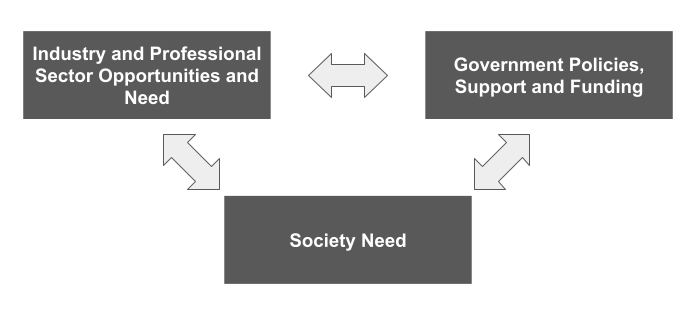
Key to the success of these educational programmes is the approach to develop education in partnership. With the First Nations Rangers example this also means being open to changing the very structure of education to non-Western world views, respecting the methods of learning, teaching and assessment that may differ greatly from highly managed, institutional-centric and administrative models. Not only is content developed with authentic perspectives of the learners for which it is designed, but knowledge remains owned by learners rather than becoming property of an institution. This leads to highly learner-centred design approaches, such as learners curating the learning journey based on what’s most needed for their progression (Pridmore and Hughes, 2024).
The implementation gap
Australia is widely regarded as one of the pioneers of microcredentials, establishing a wide consultation in 2020 with the premise of creating a Microcredential Marketplace and launching the Framework in 2021 (Australian Government, 2021). The framework is highly flexible, with microcredentials covering learning of just one hour and an emphasis on defined learning outcomes and assessment. Crucially, industry recognition (for example credit towards professional standards) is as valid as academic credits in how achievement is valued. As Palmer described, the intention was to push forward the lifelong learning agenda and harmonisation across the various forms of education, such as schools, vocational, higher education and industry learning (Palmer, et al., 2024). Three years on, there’s an opportunity for reflection. With a sense that the implementation was somewhat lacking, Griffith highlighted that there was a focus on microcredential curricula, but not on the operational aspects, such as scalability, digital architecture and financial sustainability, which should have formed part of a change management process (Palmer, et al., 2024). Beyond operational change management, the need for a change lens is a requirement for microcredentials and recognition as an educational system. Referring back to the model offered by Pridmore and Hughes (2024), there is interplay between government support, societal need and industry or professional demand and change management applies to each part of this model. Changing the educational framework, driven by change at policy level, still requires change in society to understand the what and why of microcredentials, and change in professional sectors and industry to both acknowledge and enable more flexible forms of education beyond traditional qualifications.
Change through digital transformation
Digital credentialing is a technical solution first and foremost to the portability and standardisation of recognition. Yet, this digital transformation towards opening educational routes is, as the Australian example suggests, only a part implementation to address that goal. Arguably, digital credentials and microcredentials show an attempt at digital transformation without the human context, such as social recognition and the capability of individuals to navigate the digital credential ecosystem.
The challenge of how to shift social acceptance of digital credentials and lifelong learning is being addressed in the US and France, with both countries looking towards learning marketplaces. France has adopted a digital skills wallet providing funding to the population to use against a range of learning opportunities, with course providers receiving funding from government via learner’s wallets (Werquin, et al., 2024). There are recognised challenges including how to budget for population use, the unpredictability of funding for course providers and the inherent need to have digital skills to utilise the learning account. The US Chamber of Commerce is championing the use of Learning and Employment Records (LER) and associated digital transformation as a mechanism to raise the profile of upskilling (Hansen and Tyszko, 2024). Whilst the principles are around the portability of a skills portfolio, perhaps unsurprisingly, the language around LER also refers to the monetary value of retaining, retraining and upskilling workforces and the relevance for business to engage. Whilst both examples hold potential to gain greater exposure of microcredentials and the importance of lifelong learning, possibly one of the biggest challenges is how to support learners to make choices over study routes. In both cases, the marketplace approach to the educational offer requires a level of self-awareness of the learner to consider their own goals and which courses will be best suited to meet them.
Marketplaces and learner agency
To support learner choice, learning marketplaces require transparency about the quality assurance and credibility of learning provided. They also need clear links to actual short and long term benefits for learners and employment. In one extreme, as discussed by King (Werquin, et al., 2024), some learning providers will need to fail if they don’t address market needs or lead learners to successfully meet their goals. However, enabling learners to identify what goals to address independently will remain a significant issue for wider adoption. One consequence of a heavily marketplace-driven ecosystem is the lack of engagement in certain subjects and, as acknowledged by Werquin, et al. (2024), the effect of ratings on how learners decide what courses to take. A cautious view would suggest that some subjects, perhaps those which are philosophically or technically more challenging, will have lower enrolment and require learners with greater self-motivation for study. Although these subject areas may be exactly the new skills and ways of thinking required to address national workforce skills gaps.
This is where institutions, industry and government can work together to address lifelong learning and the digital divide. If microcredentials are about standardising education, we are perhaps ignoring that learners themselves cannot be standardised. What is relevant and holds value to one group, one professional sector, or one world view, may not be applicable to another. Recognition is about articulation of and relevancy of skills and knowledge in a particular context.
Change inhibited by competing agendas
There are multiple perspectives on the value of microcredentials and how they enable recognition in different contexts, including whether the name is a barrier to adoption, the relationship of microcredentials to formal education and how microcredentials and digital credentials co-exist. In an off-programme discussion, delegates at ePIC 2024 explored the idea of whether microcredentials as a term and concept has been adopted by higher education institutions almost as a way of counteracting an existential threat. More recent microcredential frameworks, such as the European Union (EC, 2021), make more explicit reference to academic credits and in the QAA Characteristic Statement for Microcredentials there is alignment to the relevant educational qualification framework and credit weightings references (QAA, 2022). In this way, microcredentials are being defined as credit-bearing short courses.
Yet, the origins of microcredentials as digital credentials are far wider and tied to recognition of learning of all forms, including both formal and informal learning, institutional and industry-based. The discussion, which included Doug Belshaw, Margo Griffith, Bethany Pridmore, Wendy Cato, Jeremy McQuigge and others, explored the tensions between open educational systems and institutional qualifications. There were questions on whether the current framing of microcredentials was too centred on the institutional offer, with educational principles taking greater precedence than workforce needs, and how the education market may need widening to encompass more informal routes. Indeed, these principles of education in a variety of forms and for a variety of purposes exist in many frameworks (Australian Government, 2021; EC, 2021; QAA, 2022). The group explored the value of digital credentialing outside of formal education, such as community and individual recognition of learning that was unbound by institutionally-defined processes and curriculum. Indeed, a poignant point was made that the acquisition of the term ‘microcredential’ by higher education in particular had harmed the open recognition goals originally envisaged.
Bridging the formal/informal gap
Open recognition attempts to navigate the path between formal and informal learning and education, democratising what learning means and how different forms of learning are valued. The Paris Declaration on the Equality of Recognition challenges the notion that formal qualifications are of higher value than other forms of recognition and widens the perspective on how learning can be acknowledged, valued and recognised. A somewhat critical view is that through open recognition anyone would be able to recognise any skill, knowledge or attribute they wish, leading to a plethora of self-declared knowledge. In some cases, provision of easily obtainable courses can lead to the same outcome, for example where a learner collects an excessive number of digital credentials from MOOCs. Both cases may be perceived negatively by some employers as either not showing focused development or by devaluing the credentials due to their ease to obtain. Yet, this critical view assumes that all education is only valued from an employment perspective. Cultural and community value can also be placed on learning, and through opening up recognition of learning beyond formal curricula and employer-driven skills needs, celebrates the richness of human endeavour.
From the other perspective, there is a certainty about the external value to formal qualifications, which is attributed by society, industry and government (a call back again to the Pridmore and Hughes model). Microcredential adoption could benefit when aligned to such recognised qualification frameworks, providing ways to enter qualification pathways through stackable, affordable and potentially more open access routes. However, whether microcredentials should reside only within the sphere of formal, credit-bearing qualifications, or whether they should apply equally to broader forms of learning as national frameworks suggest, assumes that they cannot be applicable and of value in a range of contexts and bring harmonisation to educational systems.
Formal and informal learning can work in tandem and when designing professional learning, it often needs to. For professional development, educational goals require an alignment of individual, organisational and educational outcomes. Informal learning in practice can gain recognition through professional accreditation schemes, building on skills and knowledge developed in formal settings. Equally, formal education can provide educational activities, such as analysis, evaluation and reflection, that connect to informal learning, provide depth of thinking and through assessment bring recognition.
It may be argued then that competing agendas of open education and formalised qualifications have inhibited microcredential adoption by introducing a language of education that is unfamiliar. Phrases like ‘digital credentials’, ‘learning accounts’, ‘microcredentials’ and ‘stackability’ do not hold the same resonance as ‘course’, ‘certificate’ and ‘degree’. The social and industry change management required has not had the same focus as government policy and aspirational frameworks. Those learners who are empowered to navigate complex taxonomies of online courses, identify their learning goals and find appropriate educational experiences will do so. However, in trying to address the global skills agenda, workforce development at scale and manifest change in populations, microcredentials need more than a marketing campaign to gain momentum.
References
- Australian Government (2021). National Microcredentials Framework, Department for Education, Skills and Employment / PwC.
- EC (2021). Proposal for a Council Recommendation on a European approach to micro-credentials for lifelong learning and employability. European Commission.
- EDUCAUSE (2024). 2024 Horizon Report: Teaching and Learning. EDUCAUSE.
- Floor, N. (2023). This is Learner Experience Design. New Riders, Indianapolis, IN.
- Hansen, T. J. and Tyszko, J. (2024). Skills Savings Accounts. ePIC 2024, Opening and scaling up digital credential initiatives, 6-8 November 2024, Paris, France.
- Martin, S. (2024). Expanding the Horizon: Micro and Digital Credentialing Beyond the Anglophone World. ePIC 2024, Opening and scaling up digital credential initiatives, 6-8 November 2024, Paris, France.
- Palmer, W., Griffith, M., Pridmore, B. (2024). Lessons from Australia’s National Microcredential Framework. ePIC 2024, Opening and scaling up digital credential initiatives, 6-8 November 2024, Paris, France.
- Pridmore, B. and Hughes, Z. (2024). Micro-credentials and Indigenous Knowledge systems: Designing flexible, stackable, accessible, culturally appropriate education pathways for Indigenous Learners. ePIC 2024, Opening and scaling up digital credential initiatives, 6-8 November 2024, Paris, France.
- QAA (2022). Microcredentials Characteristic Statement. Quality Assurance Agency.
- Robert, J. (2023). EDUCAUSE and WCET QuickPoll Results: Current Trends in Microcredential Design and Delivery. EDUCAUSE Research Notes, Teaching and Learning.
- Steel, C. H., Schreck, C. M., Herbst, A. G., Van Der Merwe, H. J. (2024). Unlocking Pathways to Recognition in Southern Africa: Microcredentials Across Borders. ePIC 2024, Opening and scaling up digital credential initiatives, 6-8 November 2024, Paris, France.
- Werquin, P., Engels-Perenyi, K., King, Y. and Hansen, T. J. (2024). Lifelong Learning Accounts and Skills Savings Accounts (Panel Discussion). ePIC 2024, Opening and scaling up digital credential initiatives, 6-8 November 2024, Paris, France.
- Young, J. (2017). More Colleges Are Offering Microcredentials—And Developing Them The Way Businesses Make New Products. EdSurge.
Acknowledgement
My attendance at ePIC 2024 Conference was funded by the University of Leeds in my role as Head of Online Learning, Digital Education Service.
Leave a Reply